A Next Realm Studios course
Prompt to
Premiere
AI Short Film Production
Build a consistent character, direct it with prompts, and cut a finished episode with Seedance, Claude, and Filmora.
Taught by Holland, founder of Next Realm Studios
Inside the production process
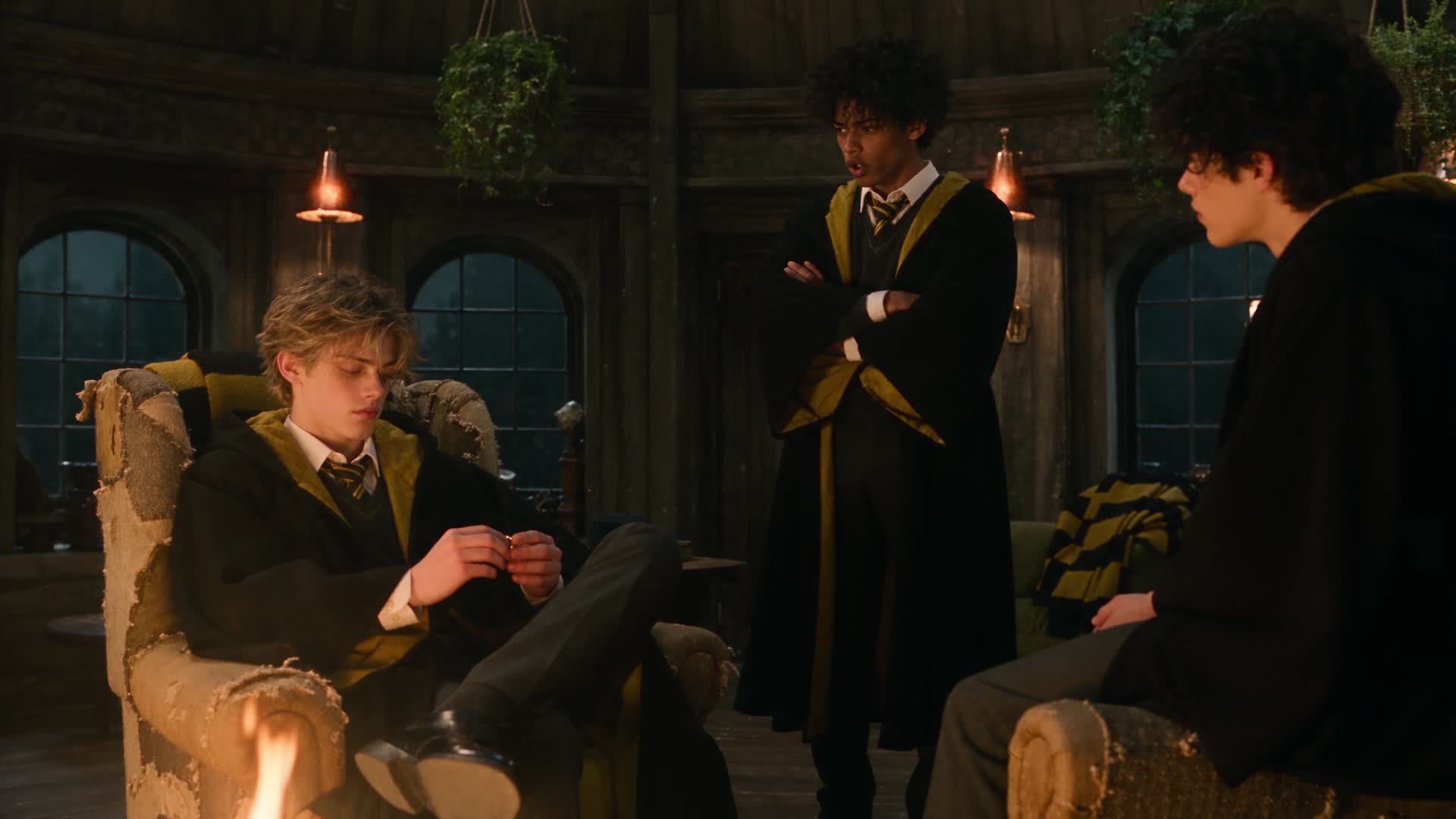
A consistent character.
Every single scene.
Cassian Rosier — an original Next Realm Studios character.
Who this is for
Made for the one-person studio
Storytellers with no film crew
You have episodes in your head and no camera, cast, or budget. This course turns a laptop and a few subscriptions into a production pipeline.
Creators fighting inconsistency
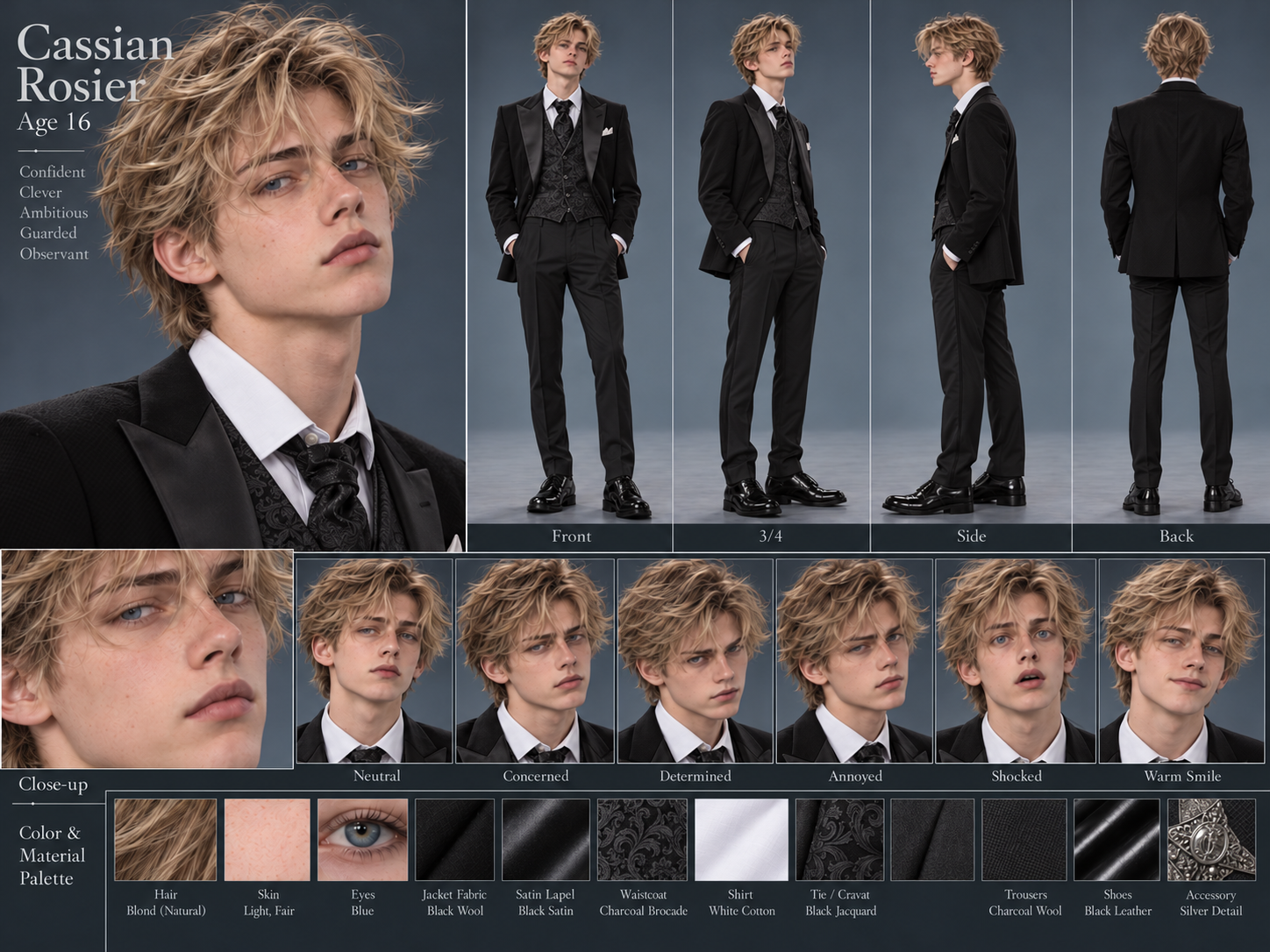
You already use AI video tools, but your character looks different in every clip. Learn the reference card system that locks identity across an entire episode.
Editors who want a pipeline
You want a repeatable process — prompt, generate, clean, cut, finish — that produces a finished episode every time, not a folder of almost-clips.
What you'll walk away with
A system, not a bag of tricks
- ✦A story bible and storyboard method you build with an AI writing partner before spending anything on video
- ✦A reusable character reference card system
- ✦A copy-and-paste prompt pack structure (universal block, global scene block, per-clip blocks)
- ✦A first-frame/last-frame continuity method that keeps scenes from jumping
- ✦A low-resolution-first workflow that cuts clip costs while you iterate
- ✦A Filmora assembly workflow including plate cleanup with the object remover
- ✦A finishing checklist: dub fixes, subtitles, color grade, watermark, cards
- ✦A publishing and protection checklist for your own work
Curriculum
Nine modules, prompt to premiere
Module 1Story foundation+
- · Brief your AI writing partner
- · Character sheets
- · Beats, scenes, and the storyboard
- · Supporting characters and NPC scenes
- · Keep the bible current
Module 2Build your character+
- · Designing an original character
- · Generating the base look
- · Locking identity across angles
- · Assembling the reference card
- · Resources: Sample reference card
Module 3The prompt pack+
- · The universal cinematic block
- · The global scene block
- · The per-clip block
- · One reaction per clip
- · Resources: Prompt pack template
- · Worked example: the common room scene
Module 4Continuity+
- · Starting from the last frame
- · When to use a first-frame image
- · Keeping the cast per clip minimal
- · Fixing drift
- · Transition and establishing scenes
Module 5Directing performance+
- · Writing acting beats
- · Pauses and facial beats
- · One short shot line per clip
- · Reroll strategy on a budget
- · Start in 480p
- · Worked example: the close-up turn
Module 6Start images and plates+
- · Generating clean start frames
- · Cleaning plates with the object remover
- · When to regenerate instead of clean
Module 7Assembly in Filmora+
- · Timeline layout
- · Overlapping clips
- · Muting to match mouths
- · Trimming only where needed
- · Transitions between scenes
- · Insufficient cuts: when to regenerate instead of forcing an edit
Module 8Finishing+
- · Selective music
- · Fixing mispronounced words
- · Subtitles: sizing and timing
- · Grade, watermark, and cards
- · The AI review pass
Module 9Publish and protect+
- · Platform formats and shorts
- · Watermark strategy
- · The rights card
- · Registering your work
- · When someone reposts your work
Worked example
See the method in action
Every example in the course uses characters and footage owned by Next Realm Studios.
Why this works
Consistency, cost, repeatability
Consistency is a system, not luck. A reference card plus a structured prompt pack means your character looks like themselves in clip one and clip forty. You stop rerolling for identity and start directing performance.
Cost control is planned, not hoped for. Clip budgets and reroll buffers are decided before you generate, so an episode has a known price and a bad generation never sinks a scene.
The pipeline repeats. Every episode uses the same steps — character, prompts, continuity, assembly, finishing, publishing — so episode two is faster than episode one, and episode ten is routine.
Built on what works today, ready for tomorrow. In our experience Seedance 2.5 currently gives the best results for this workflow, which is why the course is built around it — but the method (story bible, reference card, prompt pack, continuity, review pass) works with any clip generator.
Your instructor
Holland
Holland is an independent AI filmmaker and the founder of Next Realm Studios. The studio writes, generates, directs, and cuts its own episodic series with the exact pipeline taught in this course — every lesson comes from production, not theory.
Enroll
One payment. Lifetime access.
$—
one-time payment
- ✦ Lifetime access to all 9 modules
- ✦ All future module updates
- ✦ Cassian Rosier, Malik, and Mateo reference cards
- ✦ The prompt pack template
By enrolling you agree to the Course Terms of Use.
FAQ
Questions, answered plainly
© 2026 Next Realm Studios. All rights reserved. Cassian Rosier and all course materials are original works of Next Realm Studios. This course is an independent educational product and is not affiliated with, sponsored by, or endorsed by any software vendor or entertainment company. Seedance, Claude, Filmora, and ElevenLabs are trademarks of their respective owners and are referenced for identification only.